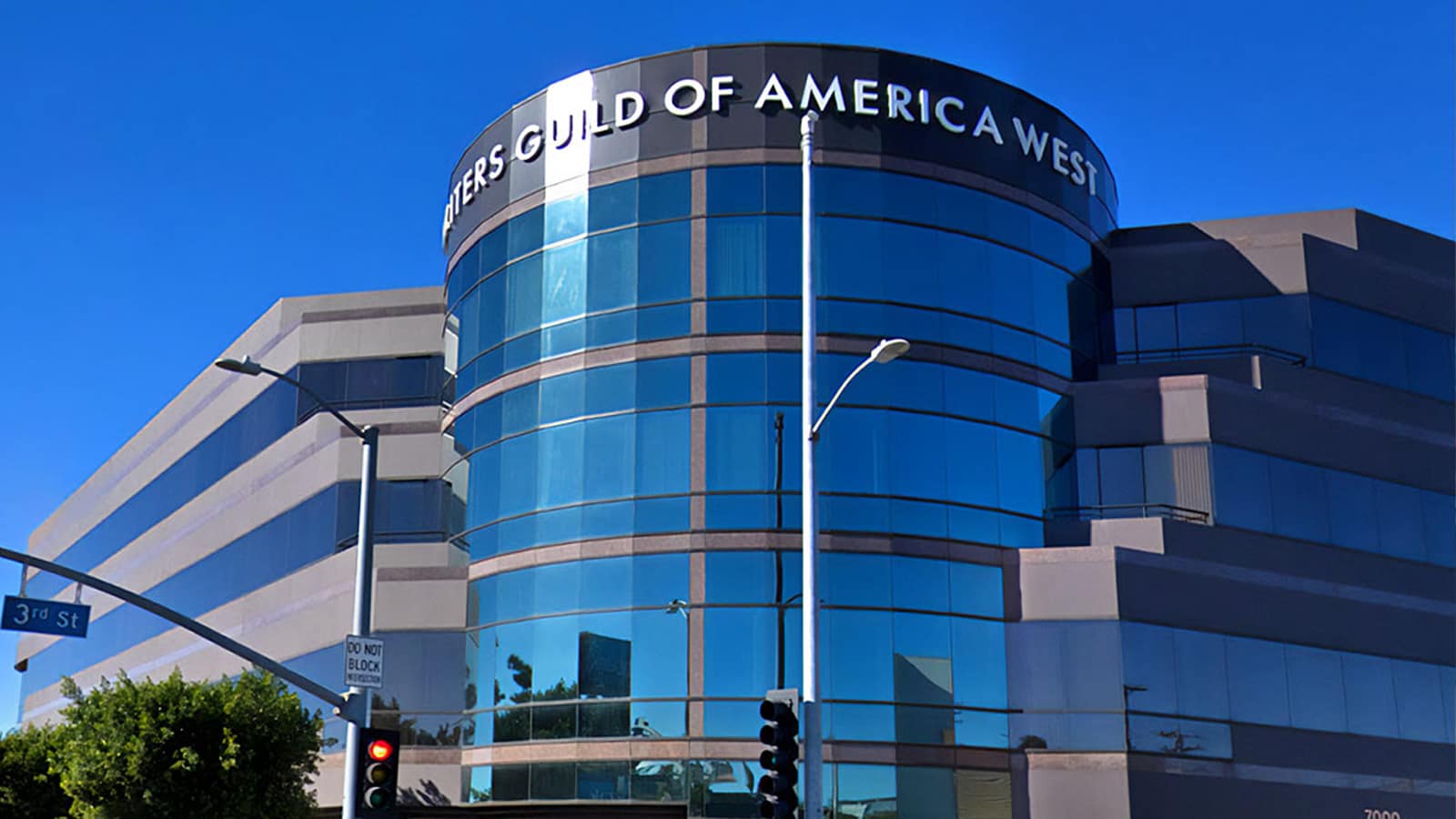
When the Writers Guild of America ratified its 2023 contract after a 148-day strike, the headlines were clean: writers had defeated AI. They had not. They had done something more interesting and more durable. They had drawn a line.
Reading the actual contract language — Article 72 of the MBA — is a useful exercise for anyone running a business that depends on creative judgment. The contract does not ban AI. It defines what AI cannot be: it cannot be a writer, it cannot be credited as one, and the use of AI by a studio cannot reduce a writer's compensation.
The line the contract drew
AI is permitted. A writer can use it. A studio can offer it. What is not permitted is treating the output as authorship. The judgment, the choices, the credit, and the compensation belong to the human.
Translated out of contract language: the craft is protected. The tools are not.
Why this is the right framing
The fights inside most companies about AI right now are framed as binary. Use it or don't. Allow it or ban it. Embrace it or resist it. The WGA found the third position, which is also the correct one: it is a tool, and the question is what work it is allowed to do.
A writer using a model to brainstorm is the same writer. A studio using a model to generate a script and then hiring a writer to polish it is something else — and the contract names that something else and refuses to allow it.
How this maps to non-Hollywood businesses
Every creative service business — agencies, design studios, consultancies, law firms with brief-writing partners, architecture practices — has the same structural question. Where is judgment? Where is craft? Where is the part of the work that the client is paying for the human to do?
Once you can name those parts honestly, the rest becomes obvious. The parts that are not craft can be systematized. The parts that are can be protected.
The two failure modes
Businesses fail this question in two predictable ways.
The first is to over-protect. To declare that everything the team does is craft, and that no AI may touch any of it. This is comfortable in the short term and ruinous in the medium term, because the team ends up doing $90-an-hour work on $20-an-hour tasks, and the math eventually breaks.
The second is to under-protect. To let AI seep into work where the client is paying for human judgment, and to do it quietly. This works until it doesn't, and when it stops working it stops working all at once.
The WGA position is the disciplined middle: name the line, defend it, and let everything outside it be optimized.
What we tell clients
Before any engagement, we ask one question: what is the part of your work that your clients would be upset to learn was done by a machine? That is the line. Everything below it is fair game. Everything above it stays human, and we build systems that protect the time and attention required to do it well.
The WGA spent 148 days on strike to negotiate this distinction. Most businesses can have it for the cost of a difficult conversation.